Related News
How to Prevent Water Meter Reversal
2025-06-06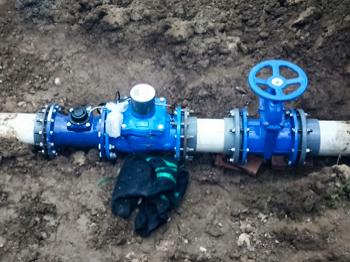

The Future of Smart Water Meters
2023-12-21
Home News
Electromagnetic Flow Meter Application Failures: Causes, Symptoms, and Solutions
Release Time:2026-01-30
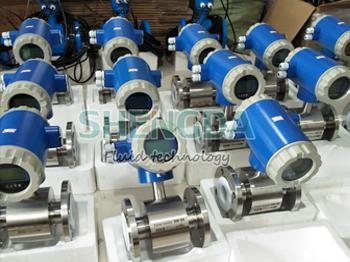
Electromagnetic flow meters, also known as magnetic flow meters, are widely used for measuring conductive liquids in water supply, wastewater treatment, chemical processing, and industrial applications. In practical use, most failures are not caused by the instrument itself, but by improper installation, environmental interference, or unsuitable fluid conditions.
Based on field application experience, electromagnetic flow meter failures can generally be divided into commissioning-stage failures and operation-stage failures.
1.Commissioning-Stage Failures of Electromagnetic Flow Meters
Commissioning-stage failures usually occur immediately after installation. These problems are mainly related to application conditions rather than product quality.
Installation-Related Problems
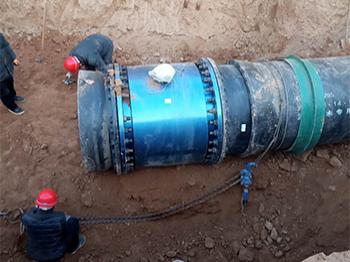
Incorrect installation is one of the most common causes of electromagnetic flow meter malfunction. Typical issues include installing the flow sensor at pipeline high points where air accumulates, insufficient back pressure at the outlet causing partially filled pipes, or installing the meter on vertical downward pipelines where empty pipe conditions may occur.
These installation errors often lead to unstable flow readings, signal fluctuation, or intermittent measurement loss.
Environmental Interference
Electromagnetic flow meters are sensitive to external electrical interference. Common sources include stray currents in metal pipelines, electromagnetic radiation, and magnetic fields generated by large motors or frequency converters.
Proper independent grounding usually resolves most interference issues. However, in environments with strong stray currents, such as electrolysis plants, additional insulation between the flow meter sensor and the pipeline may be required to ensure stable measurement.
Fluid Characteristics and Measurement Stability
Small, evenly distributed air bubbles generally do not affect electromagnetic flow meter performance. However, large air bubbles may cause output signal fluctuation. When bubbles pass over and cover the electrodes, the signal circuit may be temporarily interrupted.
For slurry applications, low-frequency excitation magnetic flow meters may generate slurry noise, resulting in signal instability. In addition, when two liquids with different conductivity are mixed but not fully homogenized before measurement, the output signal may fluctuate.
Improper electrode material selection can also cause corrosion, oxidation, or passivation, forming an insulating layer on the electrode surface and affecting normal operation.
2.Operation-Stage Failures During Long-Term
Use
After a period of stable operation,
electromagnetic flow meters may experience new problems caused by changing
operating conditions.
Deposits on Lining and Electrodes
When measuring liquids containing suspended
solids or contaminants, deposits may form on the inner lining or electrodes. If
the deposits are conductive, measurement accuracy may gradually drift. If the
deposits are insulating, the electrodes may be electrically isolated, resulting
in complete signal loss.
Lightning and Power Surge Damage
Lightning strikes can induce high transient
voltage and surge current in power and signal lines. Field experience shows
that most lightning-related damage enters the electromagnetic flow meter
through the power supply line rather than the signal cable.
Therefore, surge protection devices and
proper grounding of control room power systems are essential for reliable
long-term operation.
Changes in Installation Environment
Environmental conditions may change after
commissioning. New welding operations, added electrical equipment, or degraded
grounding systems can introduce interference that did not exist during initial
installation, causing severe signal fluctuations.
Related News